

How Learning from Mistakes Helps Children Grow with Confidence

You see your child struggling to tie their shoes, holding a pencil the wrong way, or trying to carry a glass of water that is clearly too full. You see the frustration on their face, and your heart immediately wants to help.
“Let me do it.”
You say it because you care.
After all, isn’t that what parents do? We want to protect our children from disappointment and frustration because we love them.
You show them an easier way because you have walked that path before. You know how frustrating it can feel to struggle, fail, and try again. So when your child faces the same challenge, your instinct is to say, “I know a better way. Let me help you.”
And while helping our children is an important part of parenting, there is another gift we can give them: the confidence to figure things out on their own.
Sometimes, children do not need us to remove every challenge. They need us to be there as they learn how to face it. Because for many children, a mistake is not just a mistake. It can feel like a sign that they are not good enough.
When Mistakes Feel Like Failure
“I can’t do it.”
“I’m not good at this.”
“What if I get it wrong?”
Have you ever heard your child say something like this?
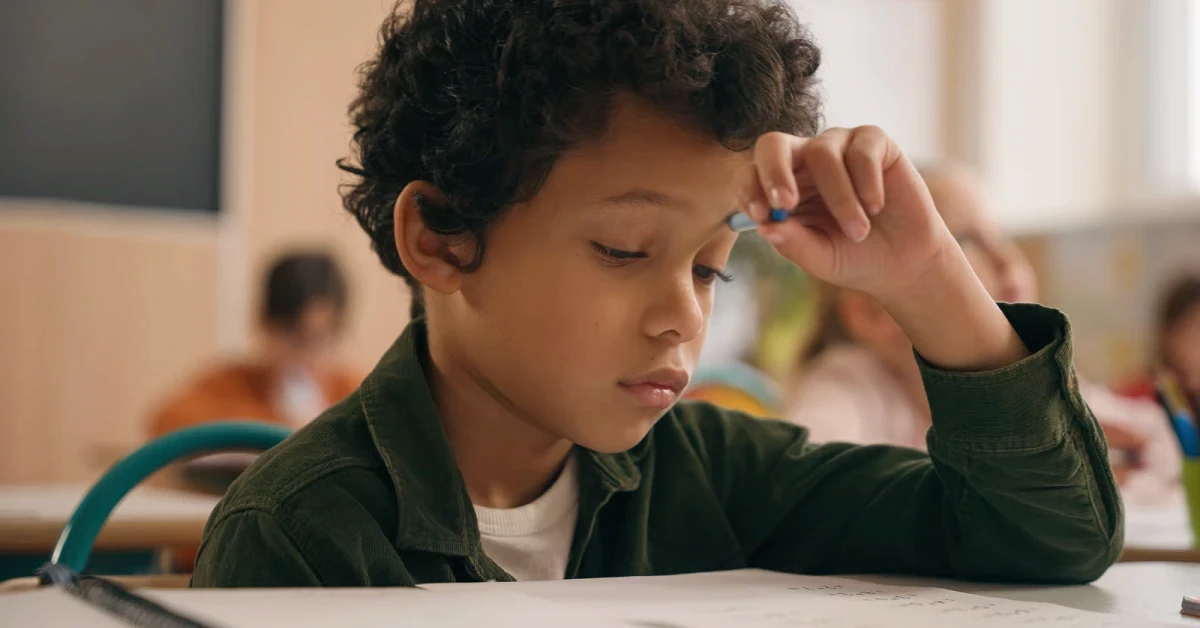
For some children, a simple mistake can feel much bigger than it really is. A wrong answer on a worksheet, a drawing that does not turn out as expected, or a game they cannot win can quickly become a moment of disappointment.
Instead of thinking, “I am still learning,” children may start thinking, “Maybe I am not good enough.”
This is why learning from mistakes is such an important part of childhood development. Children need opportunities to understand that mistakes do not define their abilities. They are simply part of the process of discovering, improving, and growing.
When children begin to see mistakes as opportunities instead of failures, they become more willing to ask questions, try new things, and keep going even when something feels difficult.
What Happens When We Correct Every Mistake?
We all want to help our children get things right.
When they give the wrong answer, we might quickly show them where they went wrong. When they struggle to do something, we may step in and show them how it should be done. When they make a mistake, our instinct can be to correct it before it becomes a bigger problem.
And sometimes, that is exactly what children need. They need guidance, encouragement, and a parent who is willing to help.
But what happens when we correct every mistake?
A child may slowly start looking to adults for the "right" answer instead of trusting themselves to figure things out. They might hesitate before trying something new because they are worried about getting it wrong. Even small mistakes can start to feel uncomfortable when children become used to having someone immediately point them out.
Over time, they may begin to think:
"What if I get it wrong?"
"Maybe I should wait for someone to help me."
"I don't want to make a mistake."
This does not mean parents should stop correcting their children. Guidance is still important. The difference lies in how and when we step in.
Sometimes, instead of immediately giving the answer, we can give children a moment to think. Instead of fixing the mistake for them, we can ask, "What do you think you could try differently?"
These small changes give children room to think, make decisions, and learn from what happens next.
And that is where learning from mistakes begins to become more than an idea. It becomes something children experience for themselves.
Why Children Need Space to Try, Fail, and Try Again
Think about a child learning to ride a bicycle.
They wobble. They lose their balance. They try again. Maybe they fall, get frustrated, and say, “I can’t do it.”
As parents, it can be difficult to watch. You already know what they need to do. You could hold the bicycle steady, tell them exactly where to put their feet, or simply do it for them.
But if we always step in, children lose the chance to discover what works for themselves.
Children need space to try things, even when they might not get them right the first time. They need time to think, make a mistake, adjust what they are doing, and try again.
This is where children begin to truly understand the value of learning from mistakes. A child who spills their drink can learn to hold the cup differently next time. A child who gets an answer wrong can look back, think about what happened, and try a different approach. A child who struggles with a new skill can slowly discover, “I’m getting better.”
These moments may take longer than simply showing children the right way. They may even get a little messy.
But that is okay.
The goal is not to let children struggle without support. Parents can still encourage, guide, and step in when help is genuinely needed. The important thing is to give children enough room to experience the process before taking over.
Because when children get to try, fail, and try again, they learn something beyond the task itself: they learn to trust themselves.
Learning Confidence Through Challenges
Confidence does not always come from getting things right.
Sometimes, it comes from remembering that you got something wrong, felt frustrated, and still managed to try again.
Think about a child who struggles with a difficult puzzle. The first attempt does not work. They try another way, get stuck again, and maybe even want to give up. But after a few attempts, they finally figured it out.
What stays with them is not just the feeling of solving the puzzle. They also remember, “I thought I couldn’t do it, but I did.”
Small experiences like these can gradually change the way children see themselves. They begin to realize that being good at something does not mean getting it right immediately. Through learning from mistakes, children discover that challenges are not proof that they cannot succeed. They are opportunities to learn, improve, and become better with practice.
Over time, these small moments teach children something powerful: they are more capable than they think. Each time they work through a challenge, children get another opportunity to discover what they are capable of.
They may not always feel confident before trying. But sometimes, confidence comes after they try.
And that is an important lesson for children to carry beyond the classroom. When they face a difficult assignment, join a new activity, or encounter a challenge with friends, they can remember that struggling does not mean they cannot do it. It may simply mean they are still learning.
These experiences also prepare children for bigger challenges in the future. When children learn that mistakes are part of growth, they become more willing to face new situations, adapt, and keep learning as they grow.
How Parents Can Support Children Without Taking Over

So, what can parents do when their child is struggling?
The answer is not to step back completely. Children still need guidance, encouragement, and reassurance. The trick is knowing when to help and when to give them a little more room.
Before stepping in, take a moment to pause. Sometimes, our first instinct is to solve the problem quickly, but giving children a little time helps them think, reflect, and try on their own.
Here are a few simple ways parents can support their children without taking over:
Ask Before Giving the Answer
When your child is stuck, it can be tempting to immediately tell them what to do. Instead, give them a moment to think.
Try asking:
“What do you think you could try?”
or
“Is there another way you could do it?”
A simple question can encourage children to think through the problem instead of waiting for someone else to solve it.
Let Them Try Before Stepping In
Sometimes, children need a little more time than we expect.
If your child is struggling to tie their shoes, for example, you do not have to take over immediately. Let them try, even if they make a few mistakes along the way.
They might get frustrated. They might ask for help. That is okay. You can offer a small hint or show them one step without doing the entire task for them.
The goal is not to make everything harder. It is to give children a chance to experience, “I figured this out.”
Praise the Process, Not Just the Result
When your child finally gets something right, it is natural to celebrate the result. After all, seeing them succeed is a proud moment for every parent.
But there is something else worth noticing: the process behind it.
Instead of focusing only on the final answer, try to notice the small things that helped them get there:
Their effort: Did they keep trying even when it was difficult?
Their persistence: Did they try again after something did not work?
Their problem-solving: Did they find a different way when the first attempt failed?
These moments may seem small, but they help children understand that progress is not only about getting things right. It is also about learning, improving, and having the courage to keep going.
Sometimes, after giving them the space to try, the most helpful thing a parent can offer is simply reassurance:
“Take your time. Try again. I’m right here.”
Being there for our children does not mean leaving them to figure everything out alone. Learning from mistakes is not about letting children struggle without support. It is about knowing when to step in and when to give them enough space to try.
In the end, children do not need parents who prevent every mistake. They need parents who make them feel safe enough to make one, learn from it, and try again.
Growing Through Mistakes with God’s Guidance
As parents, it can be difficult to watch our children struggle. We want to protect them from disappointment, frustration, and moments when they feel like they are not good enough.
But God does not call children to a life without challenges. Instead, He walks with them through every experience, including the moments when they make mistakes and learn something new.
Mistakes do not change how God sees them.
Before children achieve something, solve a difficult problem, or succeed in something they try, their value is already found in God. They are loved not because of what they can accomplish, but because they are created by Him.
This truth can change the way children see mistakes. A mistake is not a reminder that they have failed as a person. It is an opportunity to learn, grow, and become more dependent on God’s guidance. Through learning from mistakes, children can begin to see that difficult moments are not the end of their journey, but opportunities to develop wisdom, perseverance, and trust in God.
Proverbs 3:5–6 reminds us:
“Trust in the LORD with all your heart and lean not on your own understanding; in all your ways submit to him, and he will make your paths straight.”
This verse reminds children that they do not have to figure everything out perfectly on their own. They can learn, ask for guidance, and trust that God is with them throughout the process.
As parents, we can help children see challenges differently. Instead of asking only, “Did you get it right?” we can encourage them to ask, “What did you learn?” and “How can God help you grow through this?”
Because every mistake can become more than a difficult moment. With God’s guidance, it can become a step toward wisdom, perseverance, and deeper confidence.
How SPH Helps Children Grow Through Every Experience
Helping children learn from mistakes is not something parents have to do alone. Parents and schools play an important role in creating an environment where children feel supported to try, learn, and grow.
At Sekolah Pelita Harapan (SPH), we believe every child is uniquely created by God, with different strengths, abilities, and ways of learning. That is why we see education as more than achieving the right answers or perfect results.
As an international school in Indonesia, SPH provides a supportive learning environment where students are encouraged to ask questions, explore ideas, and learn through meaningful experiences. Through daily learning experiences and guidance from teachers, students are given opportunities to reflect, improve, and build confidence along the way.
At SPH, mistakes are not seen as something that defines a child’s ability. Instead, they are opportunities for students to reflect on their experiences, recognize their growth, and become more confident in their own learning journey.
Through this journey, we walk alongside families to help children develop the confidence, character, and faith they need to use their God-given gifts with purpose.

Share this blog post

Established in 1993, Sekolah Pelita Harapan (SPH) has become a trusted International Christian School in Jakarta providing Christian education for Indonesian and expatriate families. As a dedicated partner in education, SPH seeks to empower families with personalized programs and resources, fostering academic excellence, nurturing faith, building character, and facilitating their children's personal growth.