

Is Rank in Class Important for Your Child?

"What rank did you get?" For many parents, it is an innocent question. But have we ever considered how this question may feel from a child’s perspective?
A child’s progress and improvement after working hard can be a meaningful achievement. Seeing growth can help children feel proud, motivated, and encouraged to continue learning.
But are rankings truly an accurate measure of a child's intelligence, potential, or future success?
More importantly, what happens when children begin to believe that their value depends on where they stand on a list?
Let’s Look Beyond Rank in Class
Imagine two children sitting in the same classroom.
One child consistently earns the highest rank in class. Their hard work, dedication, and academic achievements are recognized by the whole school.
Another child may not always appear at the top of the ranking list, but this child shows strengths that may not always be reflected in grades. This child often asks thoughtful questions, finds creative solutions, and naturally encourages others during group activities. Their classmates often look to them as a leader and enjoy working alongside them.
If both children are asked to contribute to a group project, they may bring different strengths to the team.
One may offer strong academic knowledge, while the other may contribute creativity, communication, or leadership.
Both strengths matter.
Qualities such as creativity, character, resilience, and kindness may not always appear on a report card. Yet these qualities often shape how children face challenges, build relationships, and contribute to the world around them.
Over time, children need to learn that everyone has different strengths and grows at their own pace. This is why understanding a child’s progress requires looking beyond their rank in class.
When Competition Takes Away the Joy of Learning
After weeks of hard work, a child receives a report card and sees that their rank has improved. They feel proud of their progress.
That moment matters. Children deserve to celebrate growth and achievement.
But what happens when the focus slowly shifts from "How much have I grown?" to "Am I better than everyone else?”
Instead of feeling motivated by their own progress, children may begin focusing more on how they compare with others:
"What score did everyone else get?"
"Did I rank higher this time?"
Competition itself is not the problem. Healthy competition can encourage children to set goals, develop perseverance, and continue improving.
The challenge begins when rank in class becomes the main measure of success.
When children constantly compare themselves with others, they may start connecting their self-worth with their academic performance. Over time, this mindset can contribute to fear of failure, perfectionism, anxiety, and reduced self-confidence.
Some students become afraid to take risks because making mistakes might affect their standing. Others may feel discouraged when they work hard but still do not achieve the ranking they hoped for.
A child’s success is also found in being ahead of others. It is also found in the courage to keep learning, the willingness to grow, and the confidence to use their gifts.
Take a Moment to Ask: Who Is My Child Becoming?
Rank in class can show a child’s academic progress and the effort they put into learning. However, it is only one part of a much bigger picture. Take a moment to pause and consider a deeper question:
"Who is my child becoming through this learning process?"
Beyond grades and rankings, these questions can help you see the bigger picture of your child’s growth:
Are they developing perseverance when things become challenging?
Are they learning responsibility and humility?
Can they collaborate with others and appreciate different perspectives?
Do they show kindness, integrity, and compassion?
These qualities may not appear on a ranking chart, but they shape how children build relationships, face challenges, and contribute meaningfully to the world around them.
Education is not only about helping children gain knowledge. It is also about nurturing wisdom, character, and purpose.
Seeing Success Through God’s Eyes
Every parent wants their child to succeed.
But how do we define success? Is success only about achieving high grades, receiving awards, or earning the top rank in class?
As Christians, we are invited to see success through a different perspective.
"Where does a child's value truly come from?"
The Bible teaches that every person is created in the Imago Dei, or the image of God. This means a child's worth is not earned through achievements, grades, awards, or rank in class. Their value is already established because they are created and loved by God.
This truth helps children see success from a different perspective. A good result can be celebrated, and a disappointing result can become an opportunity to learn, but neither one determines their worth.
Scripture also reminds us that our gifts are not meant only for personal achievement.
“Each of you should use whatever gift you have received to serve others, as faithful stewards of God’s grace in its various forms.” — 1 Peter 4:10
In 1 Peter 4:10, believers are encouraged to use their gifts to serve others as faithful stewards of God's grace. Instead of asking, "How can I be better than everyone else?", children can learn to ask, "How can I use my abilities to bless and serve others?"
When children understand that their identity comes before their achievements, success becomes more than about reaching the top. It becomes an opportunity to grow, serve, and use their gifts with purpose.
Shifting the Focus from Rankings to Growth
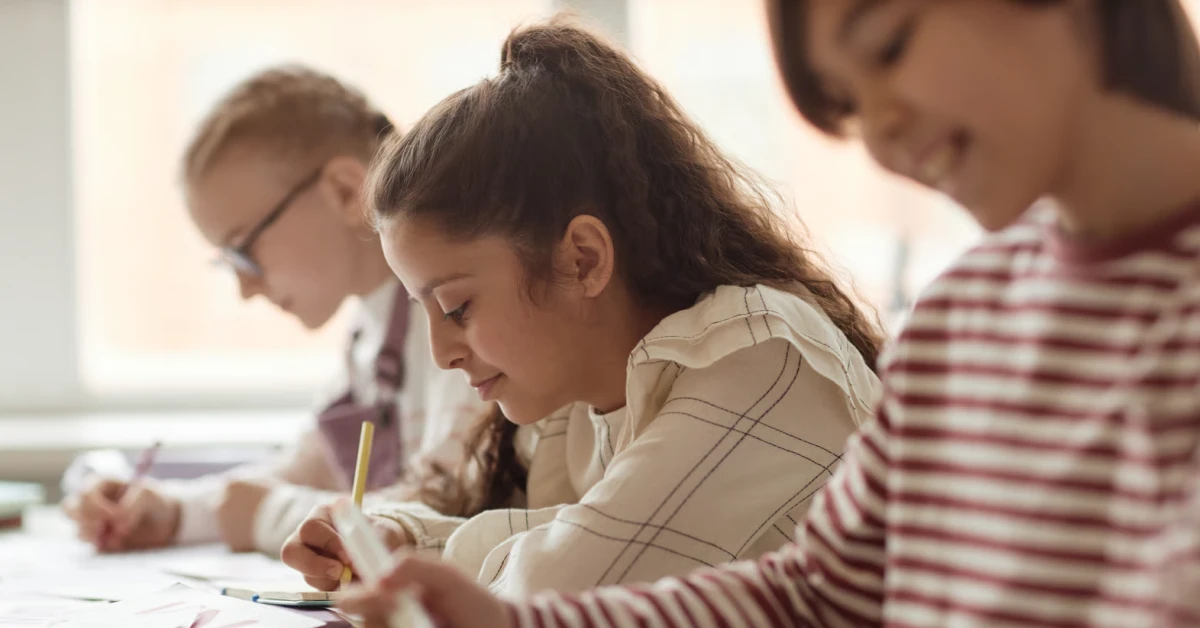
The words we choose as parents can shape how children see success.
Sometimes, a small shift in the questions we ask can change the way children approach learning. For example, instead of saying:
"You got the highest score, great job!"
Parents might say:
"I noticed how consistently you studied and how hard you worked. I'm proud of your effort."
The difference may seem small, but the message behind it is powerful.
One response focuses mainly on the result. The other recognizes the commitment, discipline, and perseverance that helped the child get there.
Of course, celebrating a child’s achievements is not the problem. The important question is what we are celebrating. Are we only celebrating the result, or are we also recognizing the effort, perseverance, and growth behind it?
When children learn that their effort and progress matter, they begin to see success as more than reaching the highest position. They learn that growth happens through challenges, practice, and persistence.
However, this perspective becomes even more important when children face disappointment.
Instead of asking only, "Why did you get this result?" parents can ask:
What did you learn from this experience?
What challenges did you face?
What might you try differently next time?
How can I support you moving forward?
These conversations do more than build resilience and a growth mindset. They also remind children that mistakes are a normal part of learning.
Perhaps most importantly, children need to know that their parents' love does not depend on their academic performance.
When children feel secure in their family's support, they are more likely to approach challenges with confidence, knowing that a mistake or disappointment does not change their value.
The Message Every Child Needs to Hear
Imagine a child walking through the door after receiving a disappointing test result.
Before asking about the score, what do they need to know first?
That they are still loved.
They are valued not only for what they achieve, but for who they are.
That a result on a piece of paper does not change their value.
That mistakes and setbacks do not make them any less worthy.
Every child wants to know that they are valued, not because of what they achieve, but because of who they are.
When homes become environments where effort is celebrated, mistakes are viewed as learning opportunities, and love remains constant regardless of results, children are more likely to develop healthy motivation and confidence.
This does not mean lowering expectations or ignoring academic growth. Rather, it means helping children understand that achievement is only one part of their story.
Their character, relationships, faith, and personal growth matter too.
When Schools See More Than Academic Achievement
Besides parents, the school environment they experience every day also plays a crucial role in shaping children's understanding of success.
At Sekolah Pelita Harapan (SPH), we believe parents and schools are partners in nurturing each child as someone uniquely created in the image of God. Here, we celebrate every child's unique gifts and value each step of their growth- helping each child flourish holistically.
As an international school in Indonesia, SPH offers internationally recognized curricula, including IB, Cambridge, and EYFS, combined with a Christ-centered approach. Through this approach, students are supported to grow academically while developing character, curiosity, and a heart for service.
While academic excellence is an important part of education, we do not define success by comparison or class rankings.
Students are supported in their learning journey with ongoing feedback and meaningful experiences that help them reflect on their progress, recognize their strengths, and continue growing with confidence.
Rather than asking, “How can I achieve the highest result?”, students are encouraged to ask, “How can I use my gifts to learn, serve, and make a difference?”
Beyond grades and rankings, what matters is how children learn, grow, use their gifts, and live out the unique purpose God has given them.

Share this blog post

Established in 1993, Sekolah Pelita Harapan (SPH) has become a trusted International Christian School in Jakarta providing Christian education for Indonesian and expatriate families. As a dedicated partner in education, SPH seeks to empower families with personalized programs and resources, fostering academic excellence, nurturing faith, building character, and facilitating their children's personal growth.